|
|
In the Epistle to the Hebrews, we read that Jesus Christ has become our great high priest. There are many such correlations that can be identified in the holy scriptures. The earlier event, person, or place is said to be a type of the later event, person, or place, from the Greek word τύπος, meaning ‘prototype, pattern, or figure’. When two events are thus correlated, it is said that a typology is established between them. The later event will never be precisely identical with the earlier to which the appeal is made. But the correlation is sought as a way of adapting or interpreting the present experience by means of the older event, person, or place, and thus celebrating the new event and revealing the providential continuity in the historical experience.
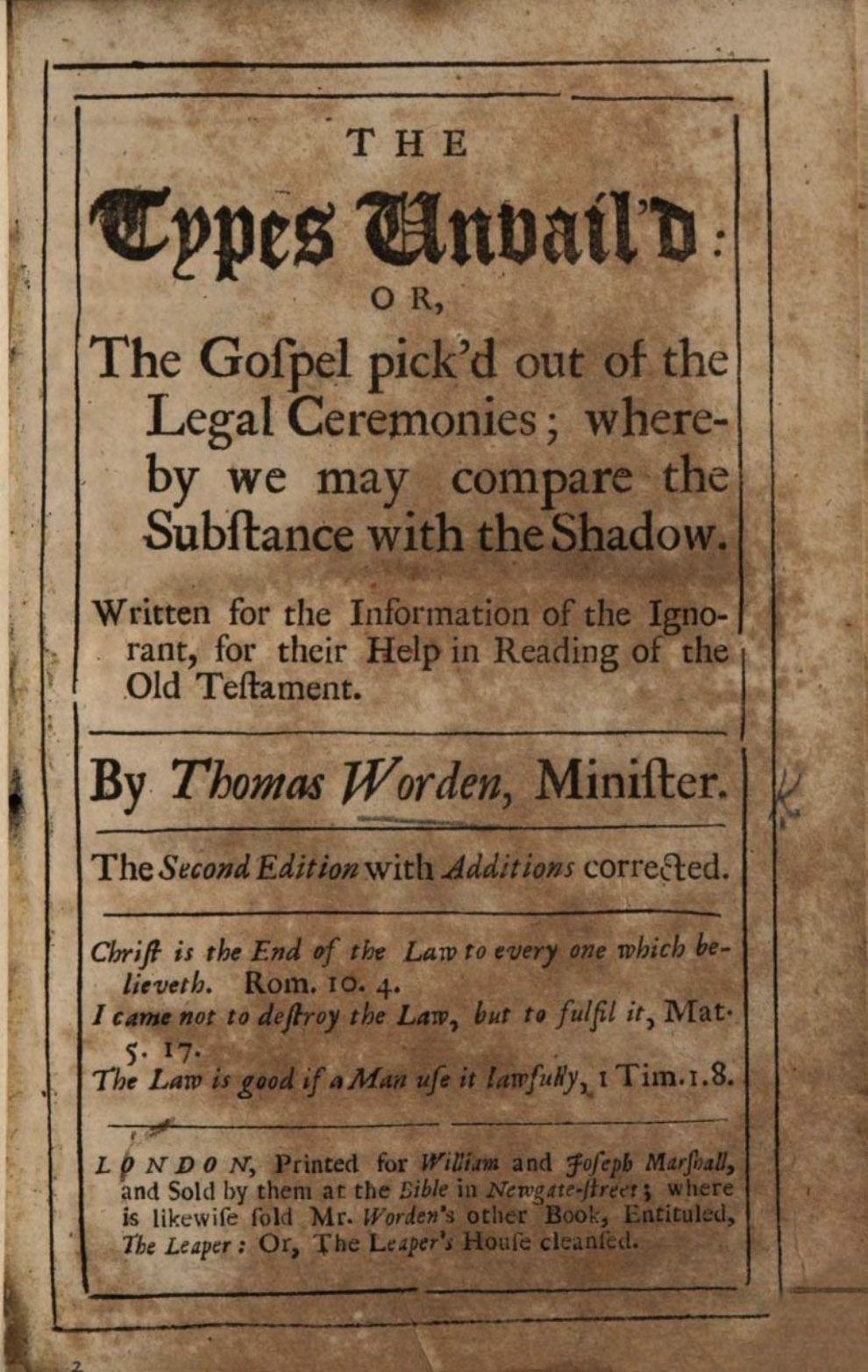
In 1664, Thomas Worden published The Types Unvail’d: or, The Gospel pick’d out of the Legal Ceremonies; whereby we may compare the Substance with the Shadow. It is an extended reflection on the typology of the tabernacle.
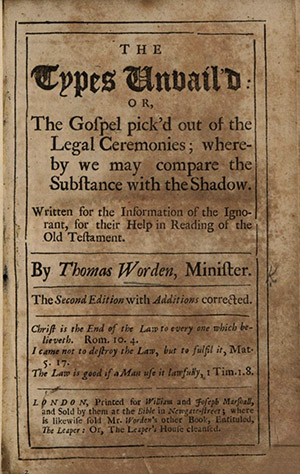
I next come to speak of these Mysterious Things, which belonged to the Robe or Garment, which the High Priest did wear about him, when he was to administer (for the People) before the Lord.
First there was a breast-plate made for the Robe, a plate of Gold four-square, in breadth and length about a spand in every way, Exod. 39.9.
In this breast-plate of Gold there was engraved the names of the twelve tribes of Israel, in Letters set in rows, with precious stones, Exod. 39. 10, 11, 12, 13, 14. There was likewise set in this breast-plate the Urim and Thummim, Exod. 28.30.
This plate was tied about the High Priests long Robe with chains of Gold, that so the Plate (which had the names of the twelve tribes written in it) might set strait upon the High Priests heart, Exod. 39. 19, 20, 21, with Exod. 28. 29, 30.
The use and purpose of this breast-plate, was to shew all believers (for their great Consolation) these things.
First, Concerning the deep sense that Christ hath of the several conditions, that his people are liable unto in this world; for you see that the names of the twelve tribes were written upon this Breast-plate, which was placed upon the High-priest’s Heart.
I say, it shews us how deeply the several conditions of the Elect are stamped upon the heart of Christ, he bears them all upon his heart, he keeps to this day (though in glory) a naked place in his heart to affect himself with his peoples conditions, saith David, Psal. 40. 5. Many O Lord are thy wonderous works which thou hast done, and thy thoughts which are to us-ward, they cannot be reckoned up in order unto thee, I would declare and speak of them, they are more then can be numbred, so Jer. 29. 11. For I know the Thoughts that I think toward you, saith the Lord, Thoughts of Peace and not of Evil, to give you an expected End: So that you may perceive, how the Scripture doth make the High Priest’s carrying the Names of the Children of Israel upon his Breast-plate, and Christ our great High Priest carrying the whole of the Conditions of his Church upon his Heart now in Heaven, to agree and simbolize.
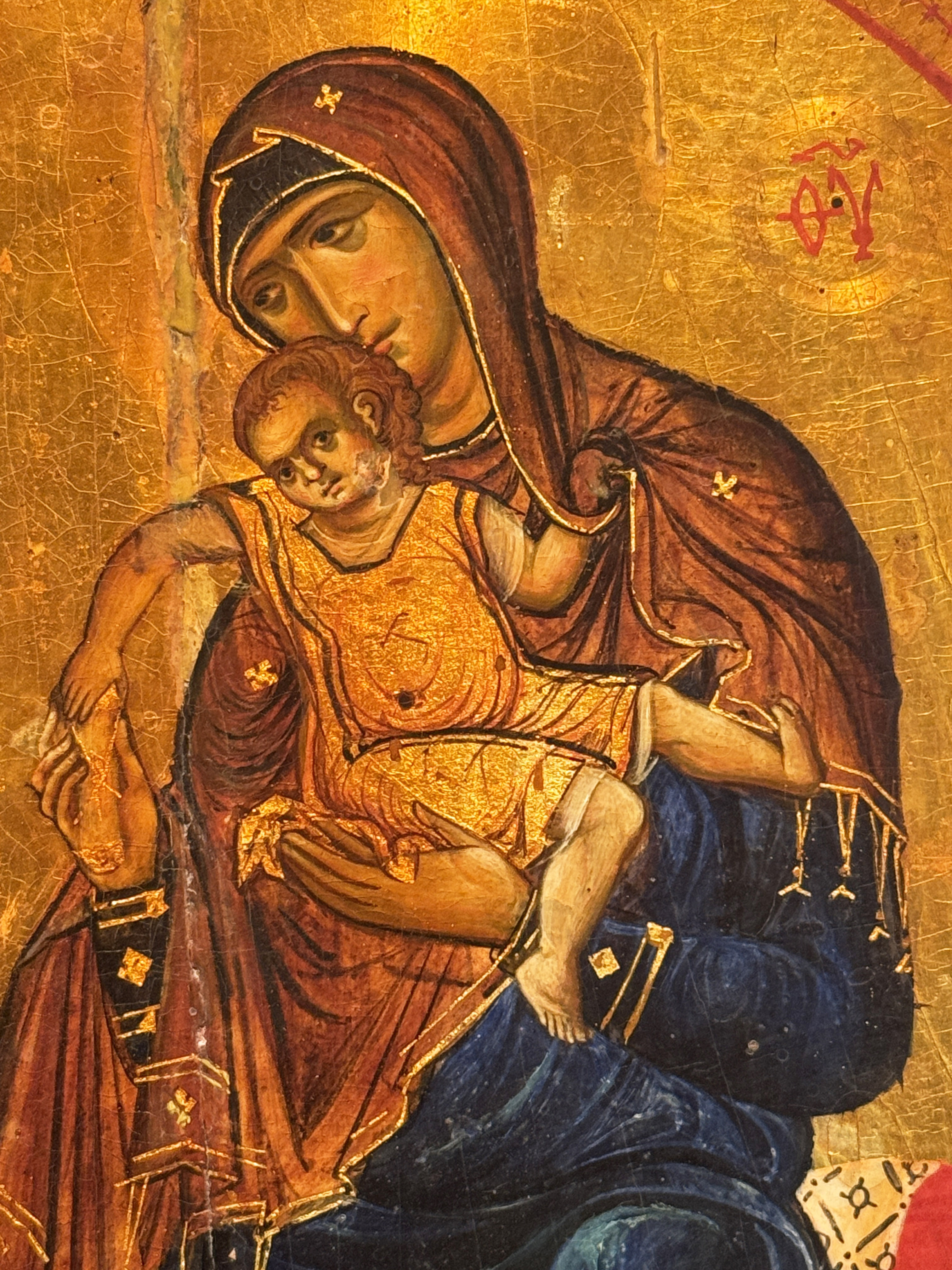
Detail of a Sinai icon of the Enthroned Virgin and Christ Child surrounded by Prophets and Saints, dated to ca. 1080-1130.
Christ grasps the veil of the Theotokos, eager to accomplish that for which he came into the world. But the Virgin’s pensive gaze is directed to the Elder Symeon and the words he holds on his scroll, ‘Yea, a sword shall pierce through thy own soul also, that the thoughts of many hearts may be revealed’ (Luke 2:35).
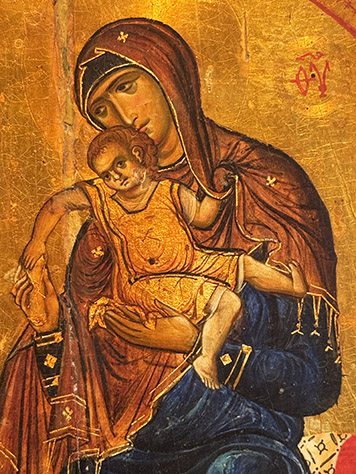
For the garment of Christ, the iconographer laid down a sheet of gold leaf, and then painted over it with glazes, depicting the garment, while retaining the luminosity of the gold.
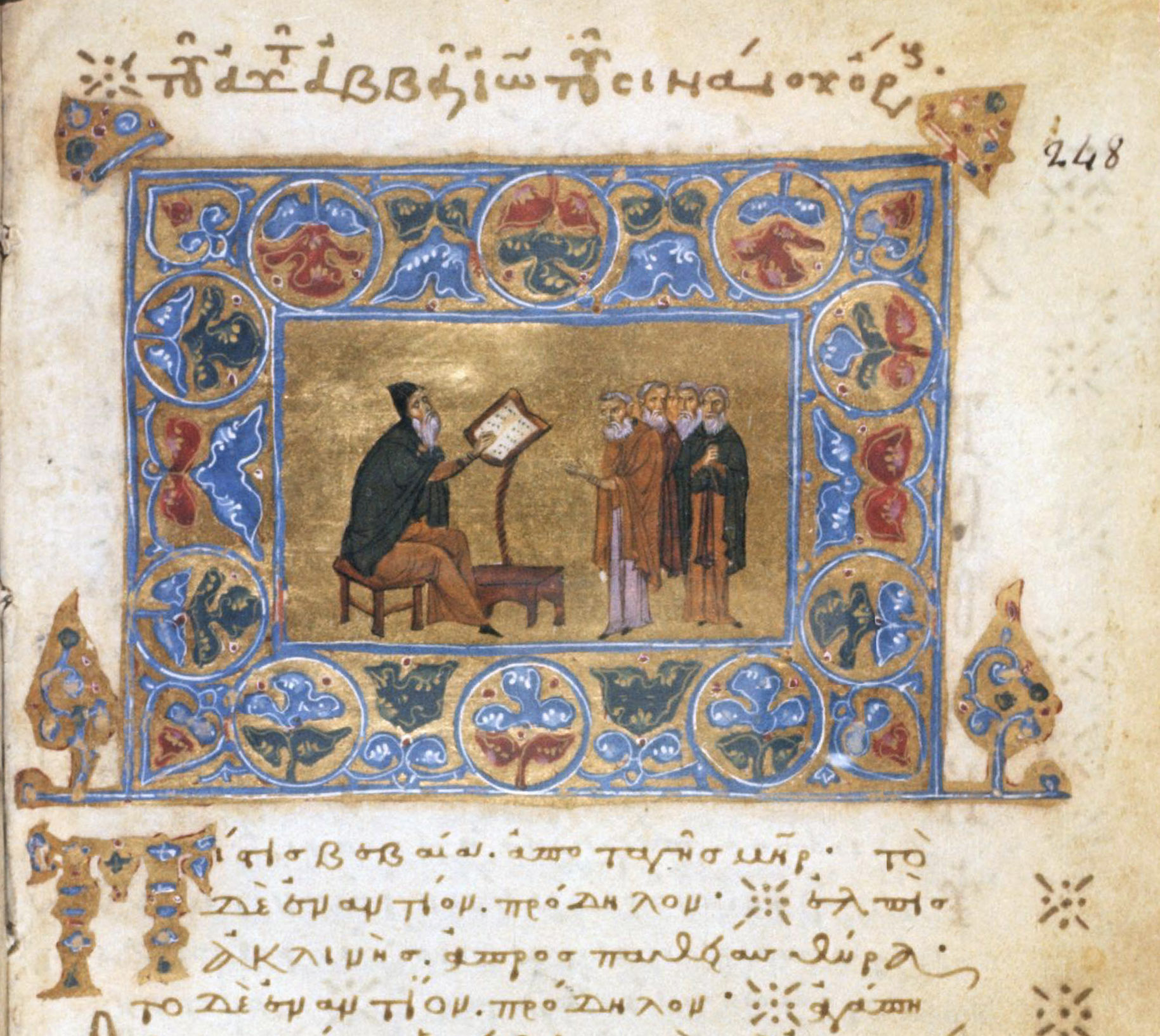
Saint John Climacus instructing the monks of Sinai, from manuscript Greek 418, folio 248 recto, a manuscript of the twelfth century.
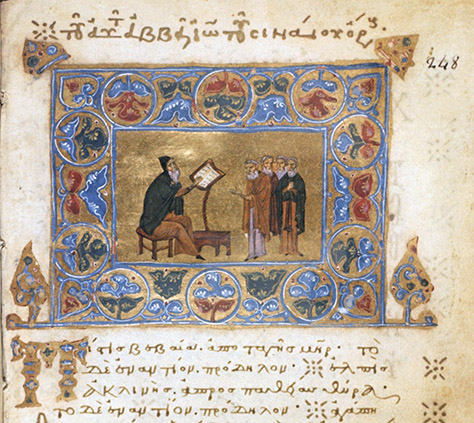
In Step Twenty-six of The Ladder of Divine Ascent we read,
Ὥσπερ διάφορα τῶν ὀφθαλμῶν τὰ φῶτα, οὕτως πολλαὶ καὶ διάφοροι τοῦ νοητοῦ ἡλίου αἱ ἐν ψυχῇ γινόμεναι ἐπισκιάσεις· ἄλλη μὲν γὰρ, ἡ διὰ τῶν σωματικῶν δακρύων, καὶ ἄλλη ἡ διὰ τῶν ψυχικῶν· ἑτέρα ἡ διὰ τῶν τοῦ σώματος ὀφθαλμῶν, καὶ ἑτέρα διὰ τῶν νοερῶν· ἄλλη ἡ ἐξ ἀκοῆς λόγου, καὶ ἑτέρα ἡ ἰδιαιρέτως κινουμένη ἐν τῇ ψυχῇ ἀγαλλίασις· ἄλλη ἡ ἐξ ἡσυχίας, καὶ ἑτέρα ἡ ἐξ ὑπακοῆς. Πρὸς τούτοις πᾶσιν ἄλλη ἡ δι᾿ ἐκστάσεως τὸν νοῦν ἐν φωτὶ τῷ Χριστῷ παριστῶσα ἀῤῥήτως καὶ ἀφράστως.
As the lights that reach the eyes differ from one another, so too are the overshadowings of the noetic Sun that occur in the soul many and various. One comes through bodily tears, and one through tears of the soul. Another comes through the eyes of the body, and another through the noetic (spiritual) eyes. One comes from hearing a word, and another the joy welling up spontaneously in the soul. One comes from hesychia (stillness), and another from obedience. Besides all these, there is yet another, one which through ecstasy presents the νοῦς to Christ in light ineffably and inexpressibly.
The νοῦς is the faculty of spiritual perception. The noetic Sun is Christ, bringing divine illumination. ‘Overshadowings’ is a reference to the Transfiguration, when a bright cloud overshadowed the disciples (Matthew 17:5, Mark 9:7, Luke 9:34). The Hesychast Fathers of the fourteenth century wrote about the experience of the light of the Transfiguration. Here Saint John Climacus anticipates them by some six hundred years.
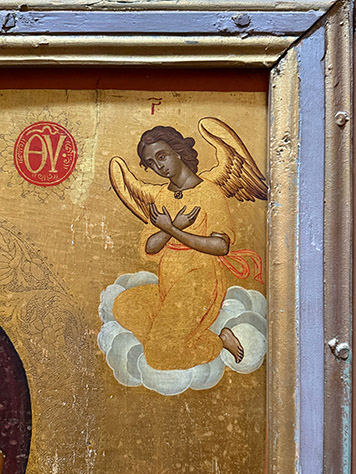
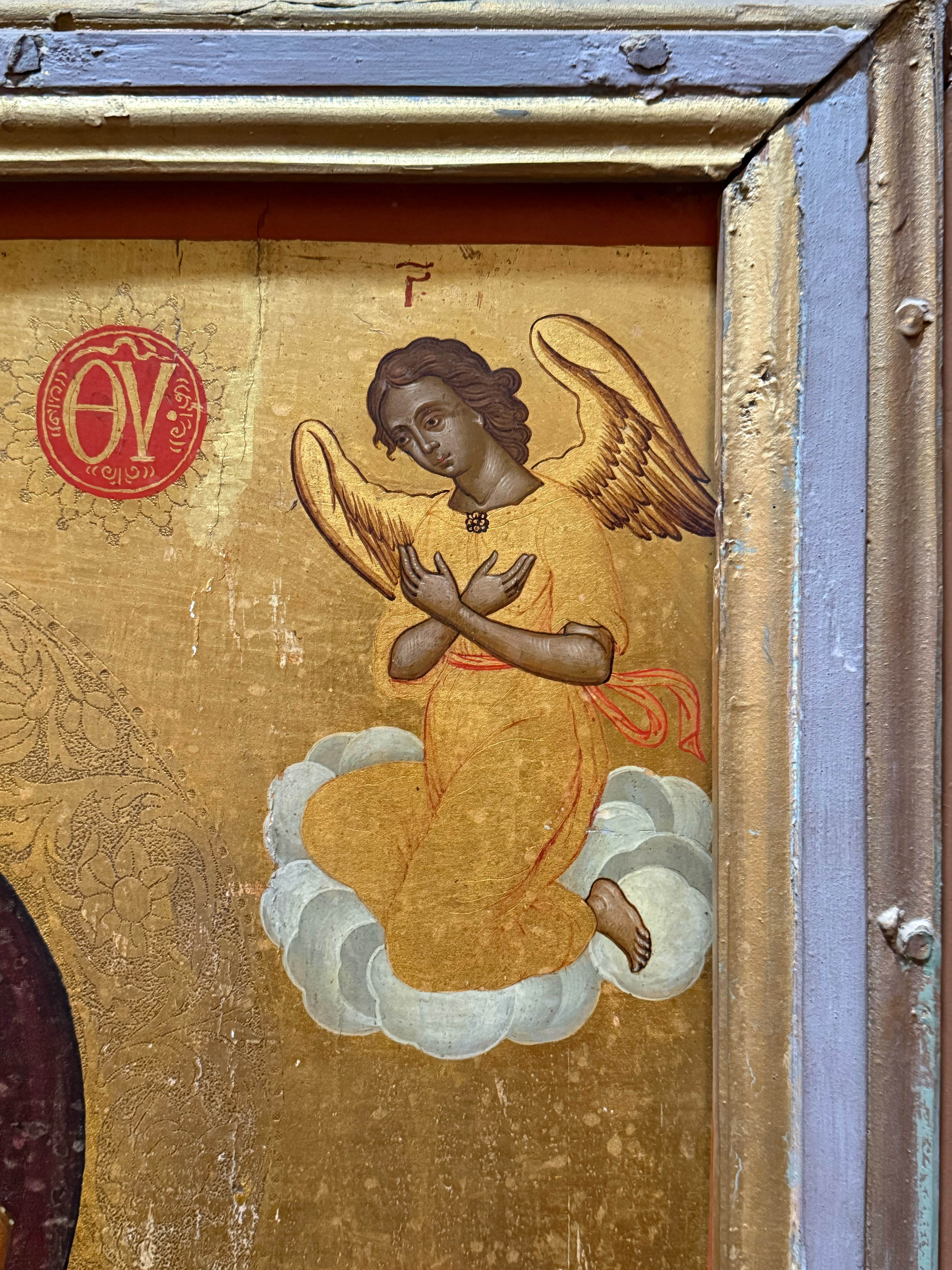
Icons of the All-holy Theotokos and Christ Child enthroned often include the Archangels Michael and Gabriel in the top corners. A detail of the Archangel Gabriel from an eighteenth century icon in the Chapel of Saint James, First Bishop of Jerusalem.
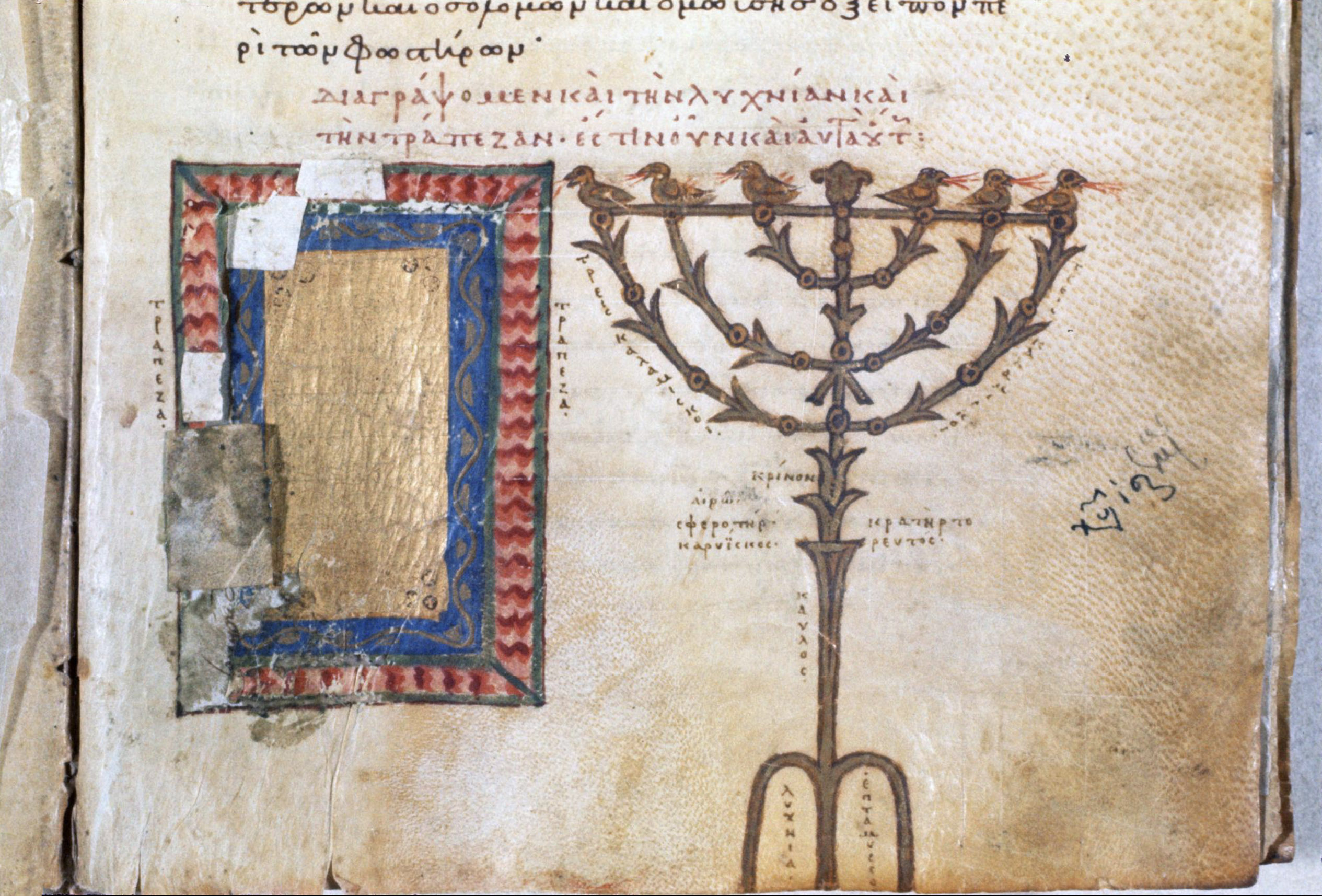
The instruments of the tabernacle, manuscript Sinai Greek 1186, 81 recto.
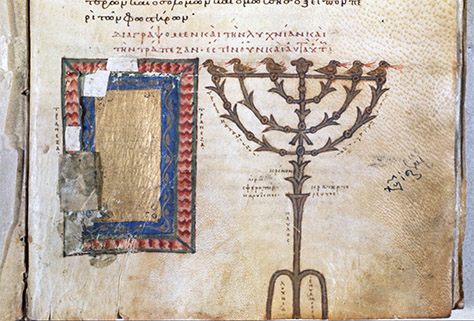
At the peak of Sinai, God revealed the tabernacle to Moses in sacred vision, and commanded him to make the same upon earth, that the worship offered here below should be a reflection of the worship that is offered in the heavens. ‘And let them make me a sanctuary; that I may dwell among them. According to all that I shew thee, after the pattern of the tabernacle, and the pattern of all the instruments thereof, even so shall ye make it’ (Exodus 25:8-9).
In the Epistle to the Hebrews, we read that the earthly tabernacle was ‘the example and shadow of heavenly things’ (Hebrews 8:5).
Jesus has become our High Priest, not after the order of the levitical priesthood, but according to the order of Melchisedec, the priest and king who blessed Abraham (Hebrews 7:1). Entering into the true tabernacle in the heavens, Christ offered himself as a blameless sacrifice once and for all. ‘We have such an high priest, who is set on the right hand of the throne of the Majesty in the heavens; a minister of the sanctuary, and of the true tabernacle, which the Lord pitched, and not man’ (Hebrews 8:1-2). ‘But Christ being come an high priest of good things to come, by a greater and more perfect tabernacle, not made with hands, that is to say, not of this building; neither by the blood of goats and calves, but by his own blood he entered in once into the holy place, having obtained eternal redemption for us’ (Hebrews 9:11-12).
This understanding is still very much a part of Orthodox services. At the fifth prayer of Orthros the priest prays,
Μνήσθητι, Κύριε, τῶν ἀγρυπνούντων καὶ ψαλλόντων εἰς δόξαν σὴν καὶ τοῦ μονογενοῦς σου Υἱοῦ καὶ Θεοῦ ἡμῶν καὶ τοῦ ἁγίου σου Πνεύματος. Γενοῦ αὐτῶν βοηθὸς καὶ ἀντιλήπτωρ· πρόσδεξαι αὐτῶν τὰς ἱκεσίας εἰς τὸ ὑπερουράνιον καὶ νοερόν σου θυσιαστήριον.
Be mindful, O Lord, of those that watch and offer psalmody unto thy glory, and that of thine Only-begotten Son and our God, and of thy Holy Spirit: be thou their helper and upholder; accept their supplications at thy heavenly and intellectual Altar. (Translated by J N W B Robertson, 1894)
Yea, the sparrow hath found an house, and the turtle dove a nest for herself, where she may lay her young, even thine altars, O Lord of hosts, my King, and my God. (Psalm 83:3)
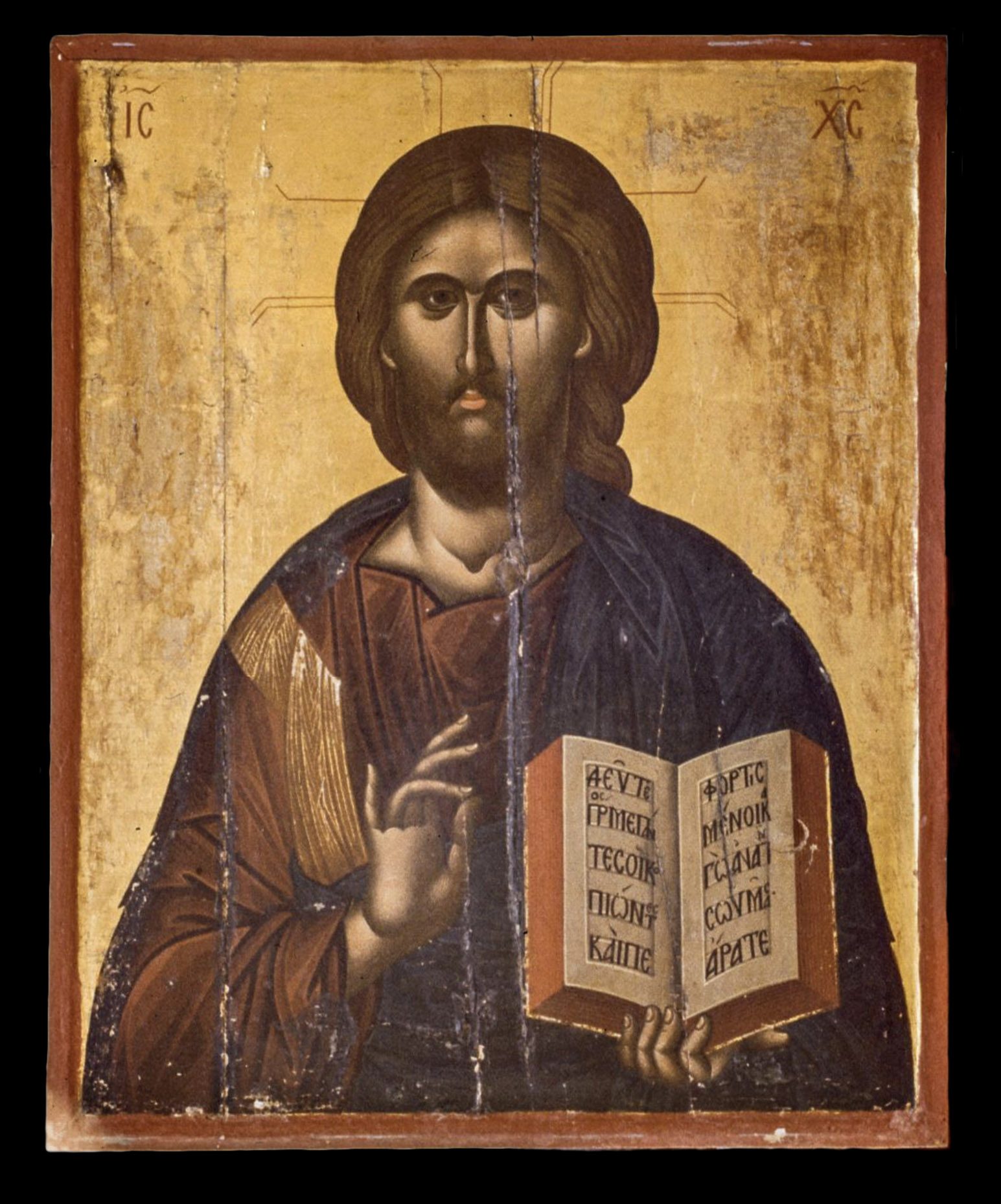
A Sinai icon of Christ Pantokrator dated to the sixteenth or seventeenth centuries. The Gospel displays the opening words of the following verses, Δεῦτε πρός με πάντες οἱ κοπιῶντες καὶ πεφορτισμένοι κἀγὼ ἀναπαύσω ὑμᾶς. Ἄρατε τὸν ζυγόν μου ἐφ’ ὑμᾶς καὶ μάθετε ἀπ’ ἐμοῦ ὅτι πρᾷός εἰμι καὶ ταπεινὸς τῇ καρδίᾳ καὶ εὑρήσετε ἀνάπαυσιν ταῖς ψυχαῖς ὑμῶν· ὁ γὰρ ζυγός μου χρηστὸς καὶ τὸ φορτίον μου ἐλαφρόν ἐστιν. ‘Come unto me, all ye that labour and are heavy laden, and I will give you rest. Take my yoke upon you, and learn of me; for I am meek and lowly in heart: and ye shall find rest unto your souls. For my yoke is easy, and my burden is light’ (Matthew 11:28-30).
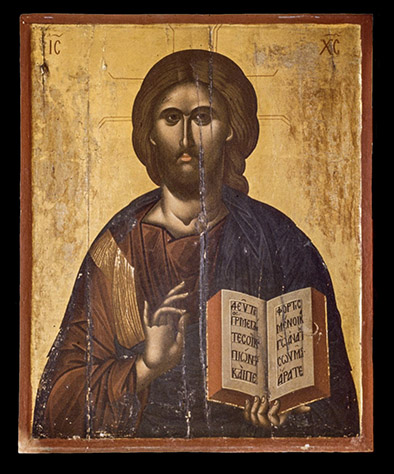
The Hebrew Scriptures were translated into Greek beginning in the third century before Christ. This translation is known as the Septuagint. In Job 5:17, 15:25, and 22:25, the Hebrew for ‘God Almighty’ was translated ‘Pantokrator’, meaning ‘Ruler of All’, ‘Almighty’, or ‘Ruler Omnipotent’. Μακάριος δὲ ἄνθρωπος, ὃν ἤλεγξεν ὁ Κύριος, νουθέτημα δὲ Παντοκράτορος μὴ ἀπαναίνου. ‘Βυt blessed is the man whom the Lord has reproved; and reject not thou the chastening of the Pantokrator’ (Job 5:17). In 2 Kings 7:8, and Amos 3:13, the Hebrew for ‘LORD Sabaoth’, ‘LORD of Hosts’ was also translated ‘Pantokrator’. Ἀκούσατε καὶ ἐπιμαρτύρασθε τῷ οἴκῳ ᾿Ιακώβ, λέγει Κύριος ὁ Θεὸς ὁ Παντοκράτωρ. ‘Hear, O ye priests, and testify to the house of Jacob, saith the Lord God Pantokrator’ (Amos 3:13).
This lexical heritage gives an added insight to the nine times the word Παντοκράτωρ is used in the Book of Revelation. Ἐγώ εἰμι τὸ Α καὶ τὸ Ω ἀρχὴ καὶ τέλος, λέγει ὁ κύριος ὁ ὢν καὶ ὁ ἦν καὶ ὁ ἐρχόμενος ὁ Παντοκράτωρ. ‘I am Alpha and Omega, the beginning and the ending, saith the Lord, which is, and which was, and which is to come, the Pantokrator’ (Revelation 1:8).
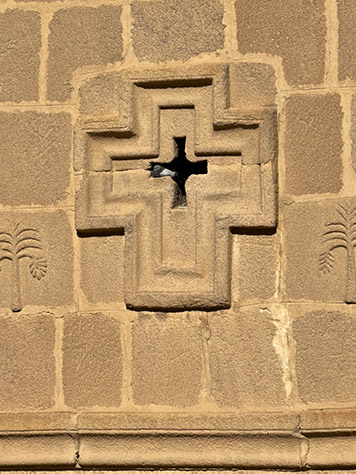
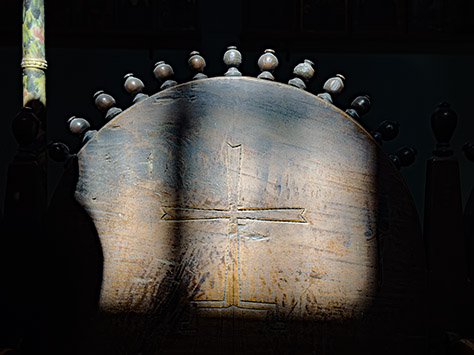
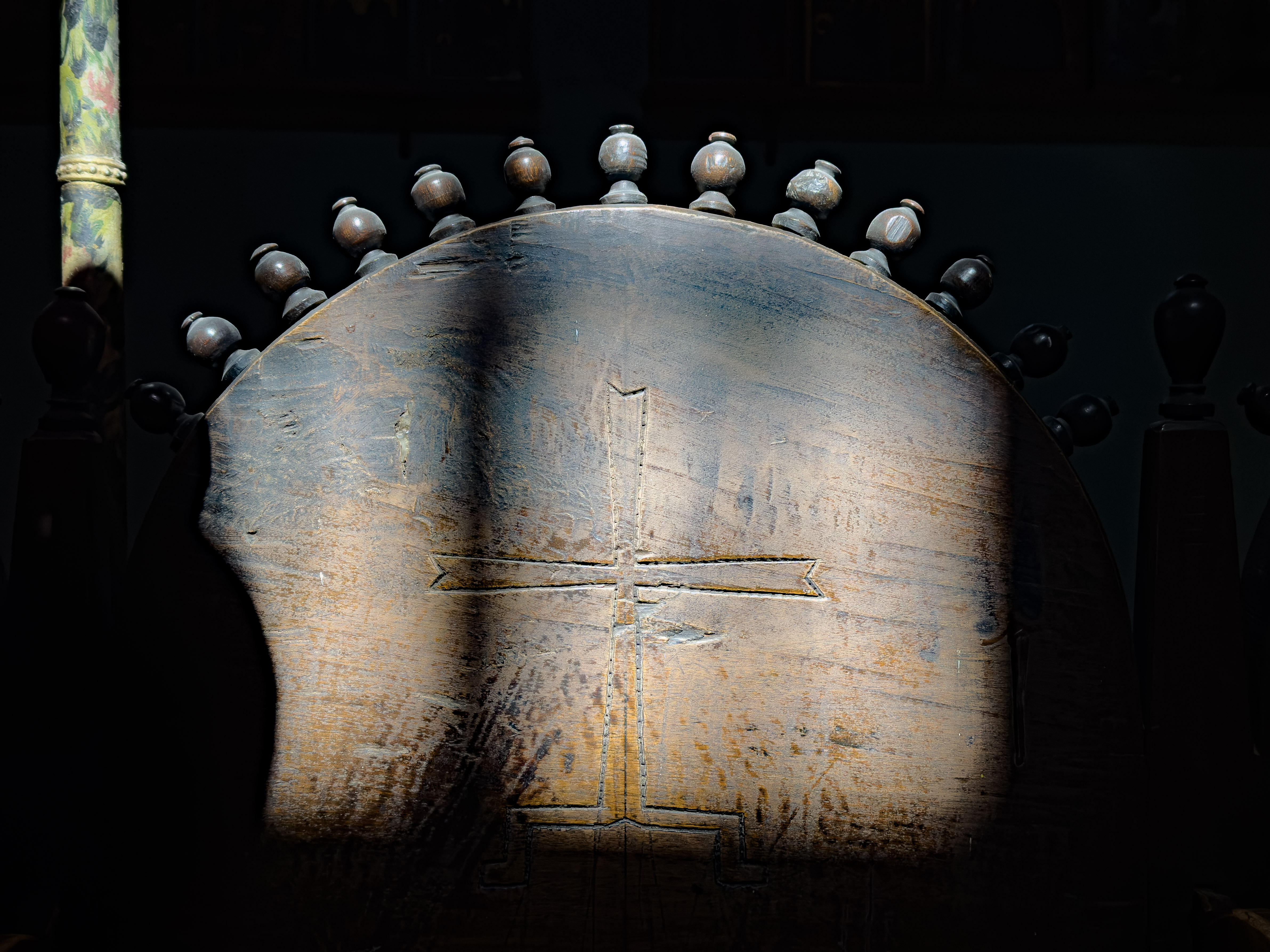
The stasidia at Sinai are made of thick panels of mahogany. The stasidia at the front of the basilica are decorated with carved crosses.
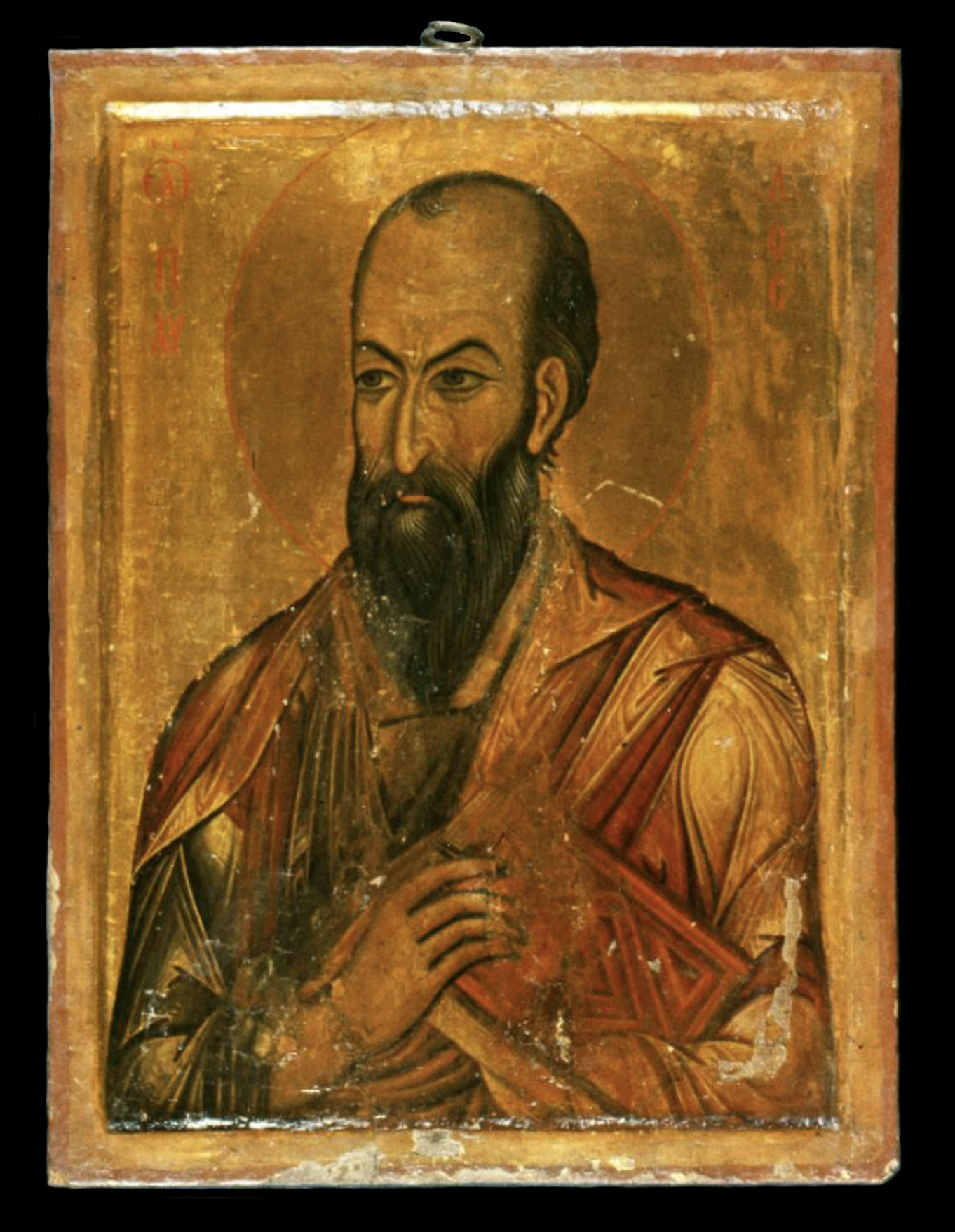
Sinai icon of Saint Paul dated to the thirteenth century.
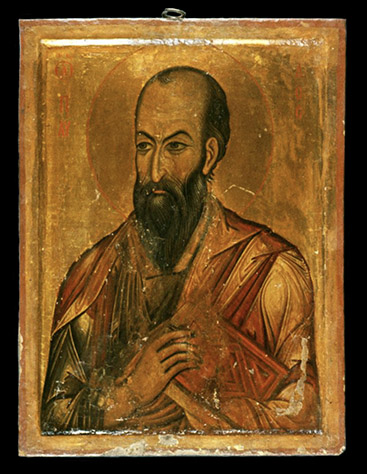
Τίς οὖν ἄρα καὶ ἡμῖν ἐπεύξεται, ἐπειδὴ Παῦλος ἀπῆλθεν; Οἱ Παύλου ζηλωταὶ οὗτοι, μόνον ἀξίους παράσχωμεν ἑαυτοὺς τῆς τοιαύτης συνηγορίας, ἵνα μὴ ἐνταῦθα μόνον ἀκούσωμεν τῆς Παύλου φωνῆς, ἀλλὰ καὶ ἐκεῖ ἀπελθόντες ἰδεῖν καταξιωθῶμεν τὸν ἀθλητὴν τοῦ Χριστοῦ· μᾶλλον δὲ ἂν ἐνταῦθα ἀκούσωμεν, κἀκεῖ πάντως αὐτὸν ὀψόμεθα, εἰ καὶ μὴ πλησίον ἑστῶτες, ἀλλ᾿ ὀψόμεθα πάντως ἐγγὺς τοῦ θρόνου τοῦ βασιλικοῦ λάμποντα, ἔνθα τὰ Χερουβὶμ δοξάζει, ἔνθα τὰ Σεραφὶμ πέταται. Ἐκεῖ Παῦλον ὀψόμεθα μετὰ Πέτρου, καὶ τοῦ τῶν ἁγίων χοροῦ κορυφαῖον ὄντα καὶ πρωτοστάτην, καὶ τῆς ἀγάπης ἀπολαύσομεν τῆς γνησίας. Εἰ γὰρ ἐνταῦθα ὢν οὕτως ἠγάπα τοὺς ἀνθρώπους, ὡς αἱρέσεως οὔσης ἀναλῦσαι καὶ σὺν Χριστῷ εἶναι, ἑλέσθαι ἐνταῦθα εἶναι· πολλῷ μᾶλλον ἐκεῖ θερμότερον ἐπιδείξεται τὸ φίλτρον.
Who is there then to pray over us, since Paul hath departed? These who are the imitators of Paul. Only let us yield ourselves worthy of such intercession, that it may not be that we hear Paul’s voice here only, but that hereafter, when we are departed, we may be counted worthy to see the wrestler of Christ. Or rather, if we hear him here, we shall certainly see him hereafter, if not as standing near him, yet see him we certainly shall, glistening near the Throne of the king. Where the Cherubim sing the glory, where the Seraphim are flying, there shall we see Paul, with Peter, and as a chief and leader of the choir of the Saints, and shall enjoy his generous love. For if when here he loved men so, that when he had the choice of departing and being with Christ, he chose to be here, much more will he there display a warmer affection.
Saint John Chrysostom, Homily XXXII, Commentary on Romans 16:17-18
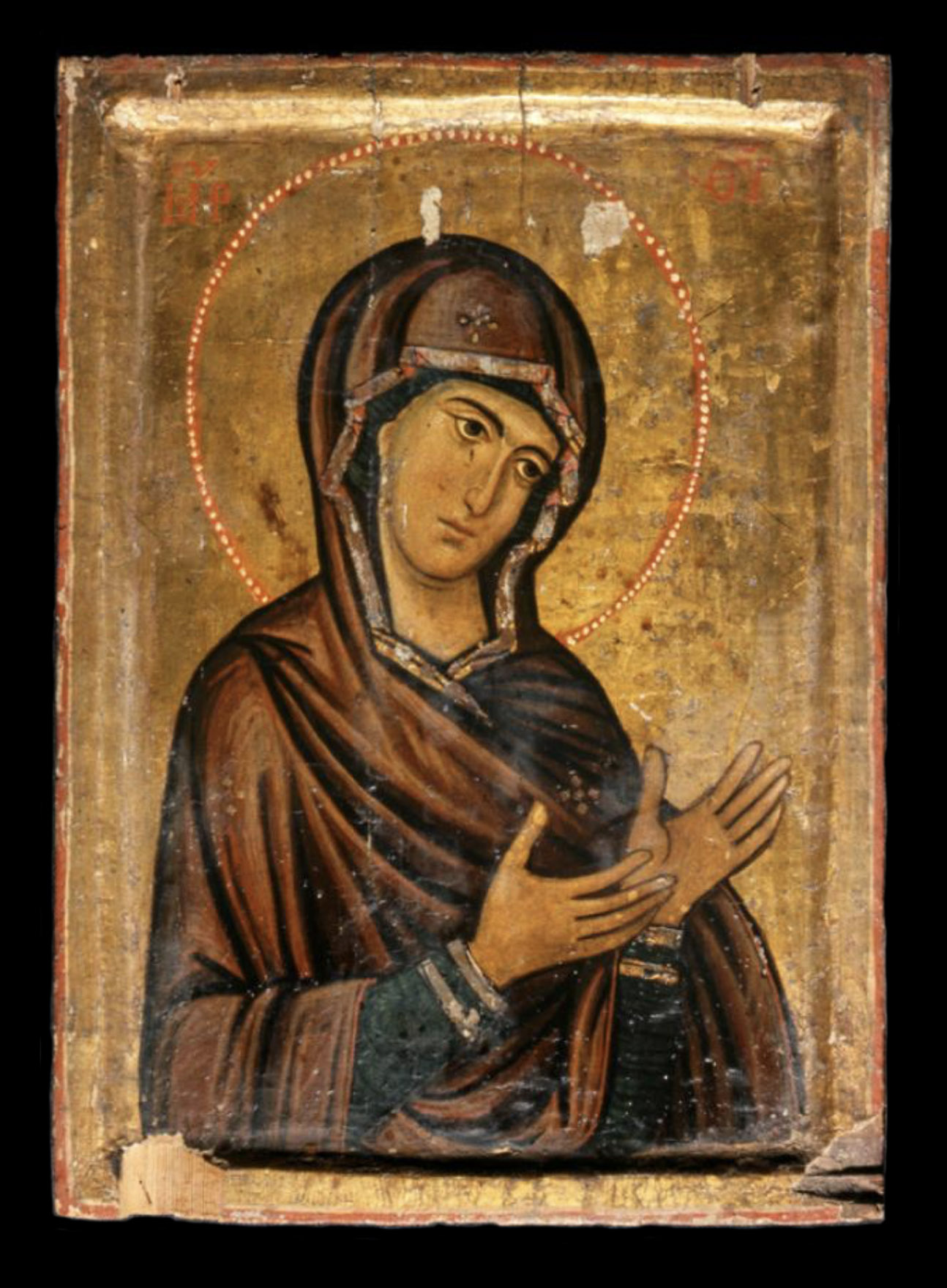
Sinai icon of the All-holy Theotokos dated to the thirteenth century.
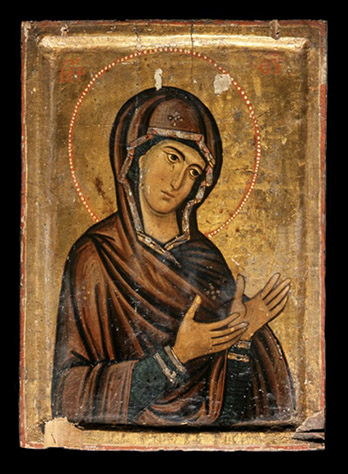
Τὴν οὐράνιον πύλην καὶ κιβωτόν, τὸ πανάγιον ὄρος, τὴν φωταυγῆ, νεφέλην ὑμνήσωμεν τὴν οὐράνιον κλίμακα, τὸν λογικὸν Παράδεισον, τῆς Εὔας τὴν λύτρωσιν, τῆς οἰκουμένης πάσης, τὸ μέγα κειμήλιον, ὅτι σωτηρία, ἐν αὐτῇ διεπράχθη, τῷ κόσμῳ καὶ ἄφεσις, τῶν ἀρχαίων ἐγκλημάτων. Διὰ τοῦτο βοῶμεν αὐτῇ· Πρέσβευε τῷ σῷ Υἱῷ καὶ Θεῷ, τῶν πταισμάτων ἄφεσιν δωρήσασθαι, τοῖς εὐσεβῶς προσκυνοῦσι, τὸν πανάγιον τόκον σου.
Let us praise the heavenly pillar and ark, the all-holy mountain, the luminous cloud, the heavenly ladder, the spiritual Paradise, the redemption of Eve, the great treasure of all the world, because salvation for the world was effected in her, and forgiveness of the ancient transgressions. For this we cry to her: Pray to thy Son and God, that he may grant forgiveness of offences to those who piously venerate thine all-holy giving of birth.
This hymn honouring the All-holy Theotokos is chanted after the Third Ode of Matins on the Sunday of All Saints. It is a cascade of Old Testament typologies and New Testament fulfillments that inform both Orthodox hymns and icons.
|


Recent Comments